
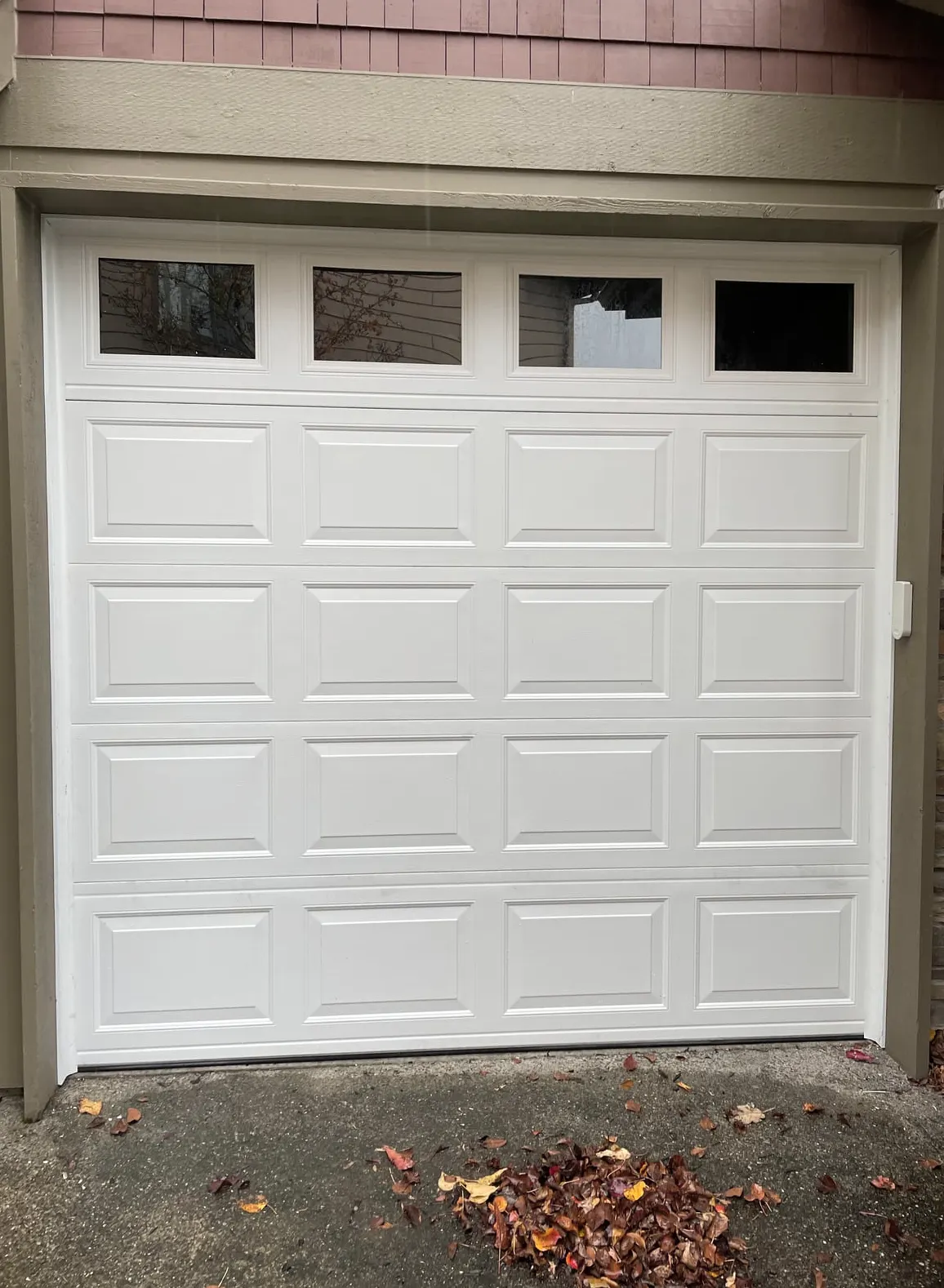
The Moment You Notice It
You're standing in the garage looking at a door that's finally given up — maybe it's sagging on one side, maybe last winter's ice turned a dent into a crack, maybe it just won't seal anymore and the cold is pouring in around the bottom. One of you says, "Let's just order one online, it'll be here in a week." The other says, "Wait, don't we need a permit for that? What about the HOA?" Nobody actually knows the answer, and now you're arguing about something you've never had to think about before. Here's the plain version, so you can stop guessing.
Do You Actually Need a Permit?
In many townships and municipalities, a full garage door replacement counts as a structural change to the home's exterior — different from a simple repair like swapping a spring or a panel — and that can trigger a permit requirement, even if the new door looks almost identical to the old one. The reason is usually tied to building codes around wind resistance and structural attachment, not aesthetics.
The only way to know for sure is to call your local building department before you order a door, not after. It's a five-minute phone call, and it saves you from the worst-case scenario: installing a door, then being told during a future inspection or home sale that it was never permitted.
Why This Matters More at Resale
An unpermitted exterior change can surface during a home inspection when you go to sell. Buyers' agents and inspectors are trained to ask about permits for anything that altered the structure, and a garage door replacement often falls into that category. Settling this now is cheaper than untangling it later.
HOA and Deed Restrictions
If your property is covered by a homeowners association or has deed restrictions, there's a second layer on top of the township permit: architectural approval. HOAs commonly regulate things like door color, panel style, window inserts, and sometimes even the brand or finish, to keep the neighborhood looking consistent.
This is where a lot of couples get tripped up. One of you picks a door style you love online; the other remembers there's an approval process and doesn't want to deal with it. The fix is simple — check your HOA's architectural guidelines (or call whoever manages the association) before you fall in love with a specific door. Submitting a photo or spec sheet for approval is usually faster than people expect, but skipping it can mean a fine or a forced do-over.
Wind-Load Codes: The Part Nobody Thinks About
Wind-load rating refers to how much pressure a garage door can withstand before it buckles or blows in. It matters because a garage door is one of the largest openings in your home's exterior wall, and in a storm, a door that fails can let wind pressure build up inside the garage and stress the roof structure.
Given the storms that roll through in summer, this isn't a throwaway spec. A wind-rated door typically has reinforced struts, heavier-gauge steel, and stronger track and roller attachments compared to a standard residential door. The trade-off is cost: a wind-rated door generally runs higher than a comparable standard door, in the hundreds-of-dollars range depending on size and features, but it buys real protection during severe weather.
- Standard door: Lower upfront cost, fine for most homes, less margin in extreme wind events.
- Wind-rated door: Higher upfront cost, reinforced hardware, better performance in storms.
Some townships require a minimum wind-load rating as part of the permit approval, which ties this decision right back to the permit conversation above.
Winter Timing Adds Another Wrinkle
If you're replacing a door heading into deep cold, factor in that installation crews work around snow, ice, and road salt tracked into the garage. A rushed install in freezing temperatures can affect how well seals set and how smoothly a new opener calibrates. If your permit or HOA approval is going to take a few weeks, it's often smarter to get that paperwork moving now and schedule the install before the hardest part of winter sets in, rather than waiting until a door fails completely during a cold snap.
When to Call White Lake Garage Door
If you're not sure whether your planned replacement needs a permit, what wind-load rating your home should have, or you just want a straight answer before you spend money, call us before you order anything. We handle Garage Door Installation and Garage Door Repair for homeowners throughout White Lake, Highland, Waterford, Commerce Township, Milford, Clarkston, Union Lake, and Walled Lake, and we can tell you what documentation or spec sheet you'll need to hand to your township or HOA.
Settle the argument with facts, not guesses. Call White Lake Garage Door today to talk through your replacement before you buy a thing.